Omaha:
(402) 496-9733
Bellevue:
(402) 291-0528


Braces are precise tools that guide teeth into healthier, more functional positions. Rather than being a single appliance, a braces system is a coordinated combination of brackets, wires and sometimes auxiliary devices that apply gentle, continuous forces. Over time these forces encourage the bone around the tooth to remodel, allowing teeth to shift while supporting tissues adapt.
The goal of treatment is both cosmetic and functional: improving bite alignment, oral hygiene access and long-term stability of the smile. An individualized treatment plan considers tooth position, jaw relationship, facial balance and the patient’s oral health habits. That plan determines which type of braces or appliance will offer the most efficient path to the desired result.
Modern orthodontics emphasizes comfort and predictability. Advances in bracket design, wire technology and treatment protocols mean that most patients experience less discomfort and fewer interruptions to daily life than in decades past. Our team aims to match the right mechanics to each patient’s situation so movements are controlled and outcomes are lasting.
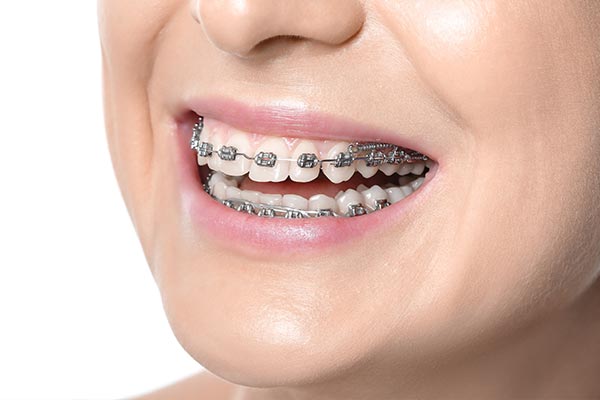
Metal braces remain a dependable option because they combine durability with precise control. Today’s stainless steel brackets are lower profile and more refined than earlier generations, making them less obtrusive while still providing the strength needed for complex tooth movements. The brackets are bonded to the teeth and work with archwires to guide alignment through planned adjustments.
One of the strengths of metal braces is their versatility. They can correct rotations, tipping, spacing and bite issues with a predictable sequence of wire changes and adjustments. For patients with more involved corrections, metal braces allow orthodontists to apply a wide range of forces and auxiliary mechanics to move teeth efficiently and safely.
Maintenance with metal braces is straightforward: thorough brushing, interdental cleaning and routine visits help prevent complications like decalcification. Because of their robust construction, metal braces are well suited to active teens and adults who need a solution that balances effectiveness with minimal need for special handling.
Ceramic or clear braces offer patients a less visible alternative to metal while retaining the conventional bracket-and-wire approach. These brackets are made from strong, tooth-colored materials that blend with enamel, which makes them appealing for image-conscious teens and adults. Although they function similarly to metal brackets, the aesthetic benefit is the primary reason many choose them.
Clear braces are a thoughtful choice when appearance matters but the mechanics of conventional treatment are still preferred. They handle most alignment tasks reliably and can be paired with contemporary archwire sequences for efficient movement. Because the materials differ from stainless steel, clinicians take care to select components and wire combinations that balance aesthetics with effective force delivery.
Patients using ceramic braces should be aware of practical considerations: in some cases ceramic brackets can be a bit more fragile and may require slightly different maintenance habits. With attentive oral hygiene and routine monitoring, these systems deliver attractive results while keeping treatment predictable and professional.
Self-ligating systems use brackets that hold the archwire in place with a built-in clip or sliding door rather than elastic ligatures. This design reduces friction between the wire and bracket, which can allow teeth to move more freely along the archwire. For many patients, that translates to a smoother feeling during appointments and potentially fewer adjustment visits.
One widely recognized self-ligating approach combines low-friction bracket design with modern heat-activated and shape-memory archwires. These wires respond to the warmth of the mouth to exert consistent, gentle forces, aiding in efficient alignment while minimizing soreness. The reduced need for frequent tightening is often appreciated by busy families and adults balancing treatment with other commitments.
Self-ligating options are available in both metal and more aesthetic materials, allowing the orthodontist to select the system that best fits clinical goals and cosmetic preferences. While no single technique is ideal for every case, integrating sliding mechanics into a treatment plan can simplify hygiene, reduce plaque accumulation around elastic ties and support predictable tooth movement.
Beyond brackets and wires, orthodontic care often relies on additional appliances to address specific jaw or bite concerns. These devices can be removable or fixed and are chosen to assist with tasks such as expanding narrow arches, guiding jaw growth during development, or modifying the bite relationship between the upper and lower teeth. They are part of a comprehensive approach to create space, correct crossbites and improve occlusion.
Some appliances are designed for short-term correction, like retainers or space maintainers, while others play a longer role in guiding growth or reducing deep overbites. The timing and sequence for using these tools is planned carefully so that each appliance helps the next phase of treatment progress more smoothly. The result is an integrated plan rather than a series of disconnected steps.
Oral habits such as thumb-sucking or prolonged pacifier use can also be addressed with specialty appliances that help retrain muscle patterns and protect developing teeth. These interventions are conservative and aim to support natural growth while the orthodontic system accomplishes tooth movement.
Throughout treatment, the orthodontic team monitors how appliances interact with braces and adjusts the approach as needed. This collaborative, problem-solving method ensures that whether a case needs simple alignment or more complex skeletal guidance, the chosen combination of braces and appliances delivers safe, stable outcomes.
Every smile is unique, and selecting the right type of braces depends on clinical needs, cosmetic preferences and lifestyle considerations. At Longo Dietz Orthodontics our focus is to recommend solutions that balance effective tooth movement with patient comfort and long-term oral health. If you'd like to learn more about which bracket system or appliance is the best fit for you or a family member, please contact us for more information.
Modern orthodontics commonly uses several types of braces, each suited to different clinical needs and patient preferences. The primary systems include conventional metal braces, ceramic or tooth-colored braces, self-ligating brackets and removable clear aligners. Auxiliary appliances such as expanders, retainers and space maintainers are often used alongside these systems to address jaw form, bite relationships and developmental issues.
Each type of appliance produces controlled forces that guide teeth through bone remodeling, and treatment plans combine mechanics, timing and hygiene considerations to optimize outcomes. The choice of system depends on the desired tooth movements, the complexity of the case and the patient’s aesthetic priorities. Discussing the options with an orthodontist helps patients understand trade-offs between visibility, durability and treatment mechanics.
Metal braces consist of stainless steel brackets bonded to the teeth and archwires that apply carefully planned forces to move teeth into position. They offer precise control over rotations, tipping and vertical corrections and are often the preferred choice for complex orthodontic movements. Because modern metal brackets are smaller and lower profile than older designs, they provide strong mechanics with improved comfort.
Metal braces are well suited for patients who require significant tooth movement or those who prefer a robust, dependable system that can withstand active lifestyles. They are commonly recommended for teenagers and adults when predictable, efficient forces are needed to correct bite and alignment issues. Proper brushing, interdental cleaning and routine checkups help maintain oral health throughout treatment with metal braces.
Ceramic braces use brackets made from tooth-colored or clear materials that blend with enamel to reduce visual impact while using the traditional bracket-and-wire approach. They perform many of the same alignment tasks as metal braces but may require specific wire selections and handling to balance aesthetics with effective force delivery. Patients choose ceramic braces primarily for cosmetic reasons when they want conventional mechanics with a less noticeable appearance.
Because ceramic materials can be more brittle than stainless steel, clinicians may recommend care adjustments to minimize accidental breakage and to select wires that complement the brackets’ properties. Oral hygiene remains essential to avoid staining of elastics or plaque buildup around brackets, and regular monitoring ensures the system continues to deliver predictable results. With attentive care, ceramic braces provide an attractive alternative for image-conscious patients without sacrificing treatment quality.
Self-ligating braces use a bracket design with a built-in clip or sliding door that secures the archwire without the need for elastic ligatures. This reduction in friction between wire and bracket can allow teeth to move more freely and may reduce the frequency of adjustments for some patients. Combined with modern heat-activated or shape-memory archwires, sliding mechanics provide consistent, gentle forces that support efficient alignment.
Self-ligating systems are available in both metal and more aesthetic materials, allowing clinicians to tailor the appliance to clinical objectives and patient preferences. For many patients, the system can simplify hygiene because there are no elastics to trap plaque, and some find appointments smoother due to reduced tightening. As with any technique, the orthodontist will evaluate whether sliding mechanics align with the specific treatment goals for predictable results.
Clear aligners move teeth through a planned series of removable, nearly invisible trays that apply controlled pressure to specific teeth over time. They are highly aesthetic and convenient for eating and oral hygiene because patients remove them for meals and brushing, but their effectiveness depends on patient compliance and the nature of the tooth movements required. Aligners excel for many mild-to-moderate alignment issues but may be less suitable for complex rotations, significant vertical corrections or cases requiring specialized auxiliary mechanics.
Orthodontists evaluate cases to determine whether aligners can achieve the intended outcomes within a predictable timeframe and may combine aligner therapy with attachments or auxiliary appliances when necessary. Regular monitoring ensures the trays are tracking properly and that refinements are planned if movements are not progressing as expected. Patients should discuss lifestyle factors and treatment goals with their provider to choose the system that best balances comfort, aesthetics and clinical needs.
Auxiliary appliances are devices used in conjunction with braces to address skeletal relationships, create space or modify growth during treatment. Examples include palatal expanders to widen narrow arches, functional appliances to guide jaw development, and temporary anchorage devices for precise tooth movements that cannot be achieved with brackets and wires alone. These tools are selected according to the patient’s age, growth potential and the specific orthodontic objectives.
Some auxiliaries are removable and worn part-time, while others are fixed to teeth for a prescribed period; clinicians plan their timing carefully to integrate each appliance into the broader sequence of treatment. Addressing oral habits, such as thumb-sucking, may also involve specialty appliances that recondition muscle patterns and protect developing dentition. The combined approach enhances treatment efficiency and supports long-term stability when appliances are used thoughtfully within an individualized plan.
Choosing the appropriate appliance begins with a comprehensive examination that includes dental records, bite analysis and consideration of facial proportions and oral health habits. The orthodontist evaluates the complexity of tooth movements required, the patient’s growth status, and any underlying skeletal discrepancies to determine which mechanics will most reliably achieve the planned outcome. Patient preferences for appearance and lifestyle factors are balanced against clinical requirements to create a realistic and effective treatment plan.
Shared decision-making is important: the clinician explains the benefits and limitations of each option and how different systems may impact treatment timing, comfort and hygiene. In some cases a hybrid approach is recommended, using one system for initial alignment and another for finishing or retention. The chosen path aims to maximize predictability and long-term stability while respecting the patient’s individual priorities.
Yes, several aesthetic options are available, including ceramic or tooth-colored braces and clear aligner therapy, both designed to reduce the visual presence of orthodontic appliances. Self-ligating brackets are also available in less noticeable materials, and clinicians can use color-matched wires or smaller bracket profiles to minimize contrast with enamel. The appropriate aesthetic choice depends on the required tooth movements and the degree to which appearance influences the patient’s decision.
Patients should be informed about practical considerations such as the potential for more delicate components with ceramic systems or the need for consistent wear with aligners. An orthodontist will recommend the most discreet option that still provides the necessary control for the case. This ensures the chosen solution aligns with both cosmetic goals and clinical effectiveness.
Good oral hygiene is essential during orthodontic treatment to prevent decalcification, gum inflammation and other complications that can affect both health and esthetics. Patients should brush thoroughly around brackets and wires, use interdental brushes or floss threaders to clean between teeth, and follow any dietary recommendations to avoid hard or sticky foods that can damage appliances. Regular professional cleanings and orthodontic checkups help detect and address issues early.
Maintaining consistent hygiene and attending scheduled appointments also supports efficient treatment progression and reduces the likelihood of emergency repairs. If a bracket becomes loose or a wire causes discomfort, patients should contact their orthodontic office for guidance rather than attempting repairs at home. With attentive care, most patients achieve healthy, stable results and enjoy long-term benefits from their orthodontic treatment.
To determine the most appropriate appliance and treatment plan, schedule a consultation with an orthodontic team that can perform a comprehensive evaluation and explain available options. In Omaha and Bellevue, patients commonly begin with a clinical exam, diagnostic records and a discussion of goals so the orthodontist can recommend a tailored approach. The consultation is an opportunity to ask about expected treatment stages, appliance choices and the sequence of care.
For those interested in exploring options with a local provider, Longo Dietz Orthodontics offers consultations to review needs and create individualized plans that balance clinical effectiveness with patient preferences. The practice’s team can explain how different systems address specific concerns and outline the steps to begin treatment when the plan is agreed upon.